Why VPNs are struggling in 2026?
At the heart of any business, there is a corporate network with critical services and applications that need to be remotely accessible to users. Enterprise VPN solutions have become a vital part of this scenario. They provide remote users with secure access to corporate resources via the Internet by creating an encrypted connection between the user and the organization's network.
With the rise of home office and hybrid work, we have many more corporates relying on solutions such as VPNs. The VPN market is on a strong growth trajectory, projected to grow from $86.02 billion in 2026 to $182.09 billion by 2030.
The main purpose of VPNs is to keep threats out while giving authorized users secure access to corporate resources via the Internet. However, the deployment of VPNs also increases the attack surface of the network in question, providing hackers with even more attack vectors. In an ironic twist of digital fate, the very tool designed to enhance security now presents a new risk. This risk is heightened by AI tools, which can discover and exploit VPN software vulnerabilities in a matter of minutes compared to the months such exploitations took in the past. This risk has also prompted warnings from security authorities, including the NSA/FBI warning about VPN infrastructure attacks.
VPNs are high-value targets for cyberattacks because of their widespread use. Additionally, once a VPN is compromised, malicious actors can potentially gain access to the entire corporate network, putting the wider business at risk. And if the network is interconnected, it can percolate across the entire ecosystem.
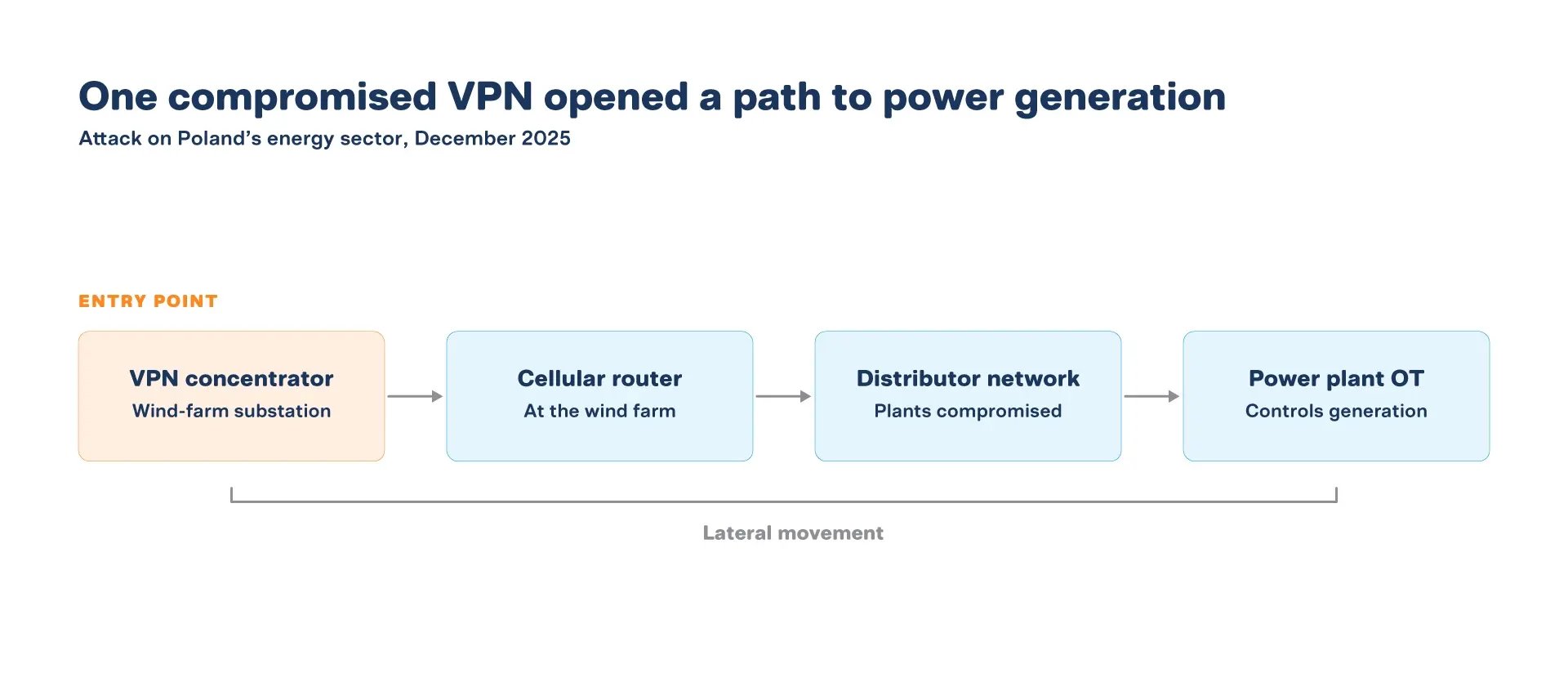
We’ve seen this in practice during the December 2025 attack on Poland’s energy-sector, where a VPN concentrator was compromised at wind-farm substations, opening a deeper pathway into the entire energy system. After gaining access to the VPN, attackers used the wind farm’s cellular router to laterally move into the distributor's network, compromising connected power plants. Lateral movement enabled the intrusion and access to a plant’s operational technology network that controls power generation.
VPNs still encrypt connections and facilitate remote access, which is valuable work. So the challenge becomes protecting the VPN infrastructure itself from unnecessary exposure to the public Internet and AI-driven attacks.
Why do VPNs fail?
VPN endpoints have IP addresses that are accessible on the public Internet, so users can access the network via the Internet and perform their duties. But it also opens the door for malicious actors. Hackers discover such IP addresses by “port scanning” – a method that identifies open ports and services available on a networked computer. By probing a range of ports on a target system, criminals determine which ones are open and most vulnerable to attack. This makes VPNs a common target of malicious actors who are constantly scanning the web for possible targets.
The VPN exposure on the Internet can lead to:
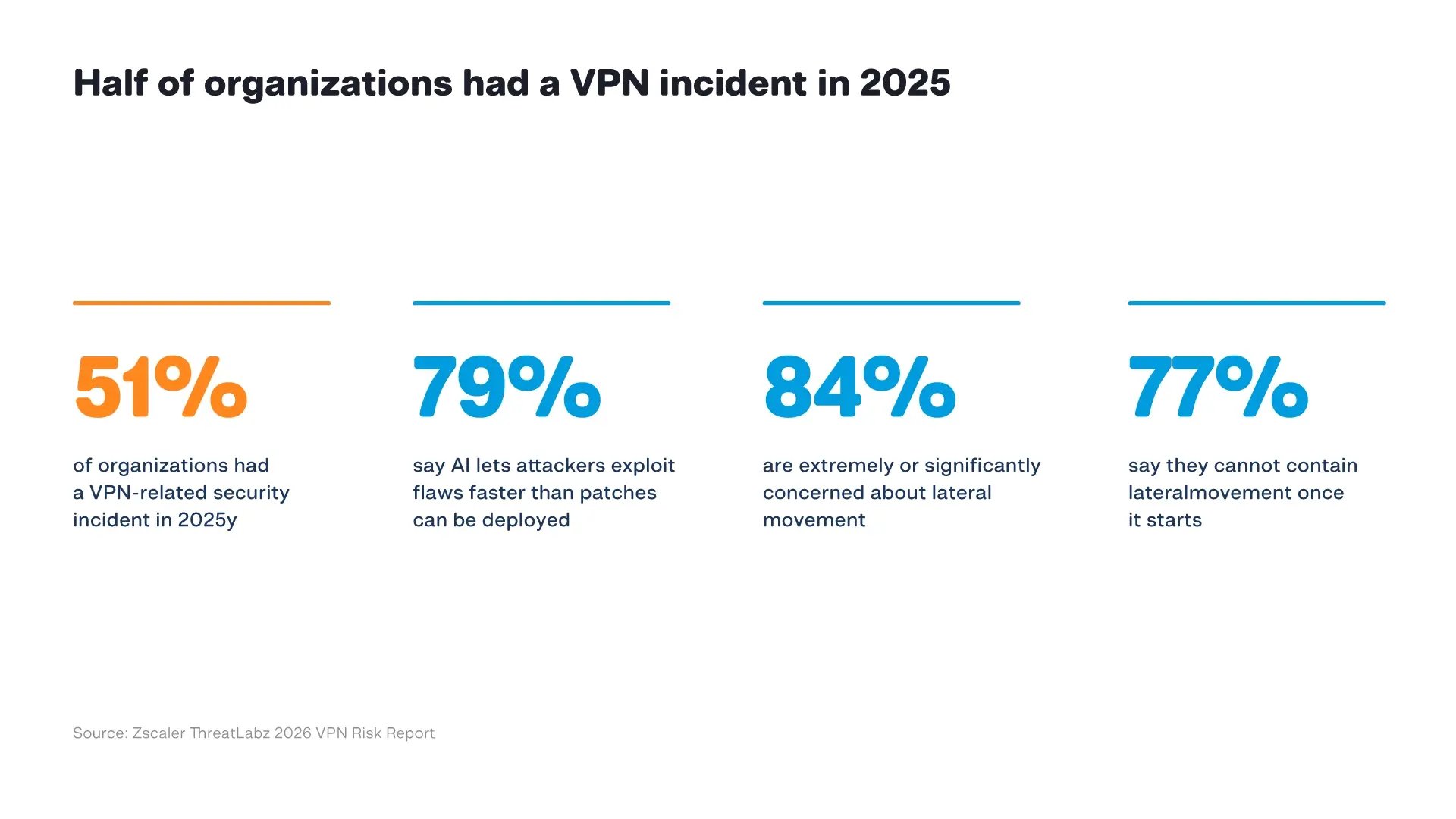
- DDoS and ransomware: The combination of a growing attack surface and methodical scanning by cybercriminals increases exposure to threats such as ransomware, malware, and DDoS attacks. According to the Zscaler ThreatLabz 2026 VPN Risk Report, 51% of organizations experienced a VPN-related security incident in 2025. Ransomware (42%) and DDoS attacks (30%) were among the top threats exploiting VPN vulnerabilities in 2024.
- Zero-day vulnerabilities accelerated by AI: Zero-day exploits hinge on vulnerabilities in hardware or software that are unknown to its developers. Once a software vulnerability is discovered, it is simply a matter of time for cybercriminals to identify who deploys that VPN software and attack it. According to the Zscaler ThreatLabz 2026 VPN Risk Report, 79% of respondents say AI enables attackers to exploit vulnerabilities faster than patches can be deployed.
- Lateral movement: When VPNs are exploited, these security tools inadvertently become channels for lateral threat movement, escalating the potential for cybercriminals to amplify breaches across the network. A single breach, regardless of its origin, can lead to system-wide compromise. Cybercriminals infiltrate networks via users, systems, and zero-day vulnerabilities. Alarmingly, even when a vulnerability is detected and patched, hackers retain their foothold. In the time it takes to patch a problem or block access, these vulnerabilities become a hacker’s playground. Gaining control of an organization's network tools and digging deeper into the business's IT environment is what a hacker lives for. Breaching a network is just the beginning. Hackers establish infamous backdoors, putting the network in a state of perpetual jeopardy. According to the Zscaler ThreatLabz 2026 VPN Risk Report, 84% of respondents express extreme or significant concern about lateral movement, yet 77% say they cannot contain it once it starts.
These are only the top three traditional VPN problems in 2026.
Does this mean you should rip-and-replace your VPN?
No. Keep your VPN. Reduce its attack surface.
VPNs still play an important role in securing remote access by encrypting communications between users and corporate networks. The challenge is not necessarily the VPN itself, but the fact that its infrastructure is exposed to the public Internet.
With SCION technology, organizations can protect their existing VPN infrastructure without replacing it. Anapaya offers two solutions that reduce the attack surface by controlling who can reach the VPN in the first place. The difference lies in what access is based on: the network a user connects from, or the identity of the user.
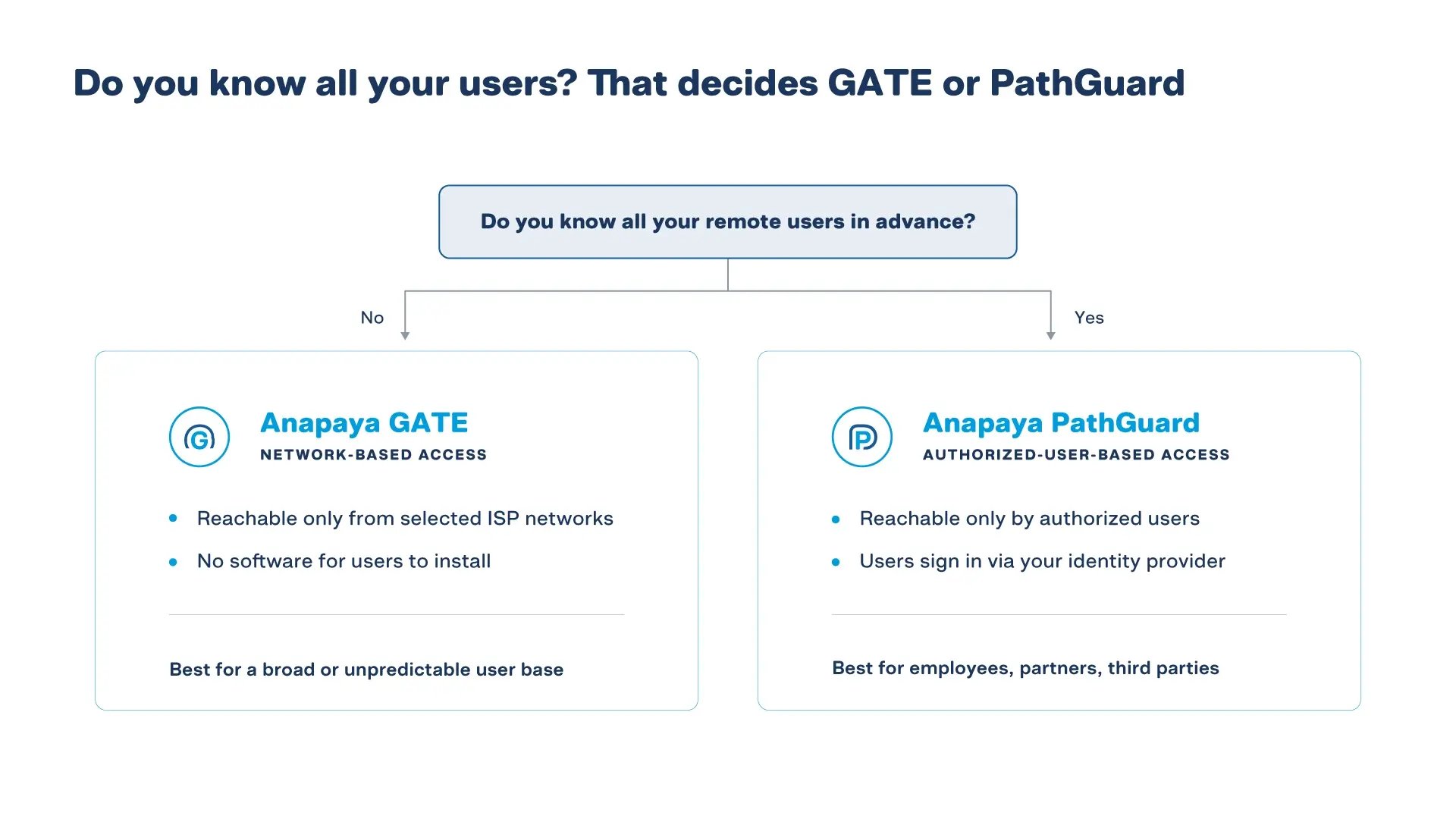
Anapaya PathGuard: Authorized-user-based access - When you know your users
For organizations with a defined group of employees, partners, or third parties who need remote access, Anapaya PathGuard makes VPN infrastructure reachable only to explicitly authorized users.
Instead of exposing the VPN gateway to everyone on the public Internet, Anapaya PathGuard establishes controlled connectivity between authorized users and the protected service over the SCION network.
Users who are not authorized cannot establish a network path to the VPN infrastructure, significantly reducing its exposure to scanning, DDoS attacks, and attempts to exploit software vulnerabilities.
Anapaya GATE: Network-based access – When you don't know all your users
For organizations that need to provide VPN access to a broader or less predictable user base, Anapaya GATE offers a different approach.
By making the VPN reachable only through selected ISPs and their networks, organizations can limit who can access their infrastructure without requiring individual users to install additional software.
The VPN remains accessible to users within the selected networks while being unreachable from the rest of the public Internet.
Both solutions share the same principle: keep the VPN and reduce its attack surface, rather than relying exclusively on detecting and blocking attacks after they reach the infrastructure.
Cybersecurity solutions for protecting Internet-facing VPNs
How SCION technology reduces VPN security risks
Strengthening your VPN security starts with minimizing its attack surface. Enterprises can secure their VPN infrastructure on the SCION network via Anapaya GATE or Anapaya PathGuard, be it on a server or in the cloud.
Unlike security measures such as firewalls and Geo-IP filtering, which filter traffic once it has already reached the customer's VPN, Anapaya GATE and Anapaya PathGuard control traffic at the network level, before it reaches the customer VPN infrastructure. With the GATE, incoming traffic is restricted at the ISP level, allowing the protected VPN service to be reached only through selected GATEs and trusted networks. With Anapaya PathGuard, only authorized users are allowed to reach the application.
This means that instead of exposing a VPN gateway to anyone on the public Internet and then filtering unwanted traffic, organizations can control who can reach it in the first place.
With Anapaya GATE, reachability is restricted to selected networks. With Anapaya PathGuard, only explicitly authorized users can establish a network path to the protected service. Both approaches reduce its exposure to scanning, DDoS attacks, and attempts to exploit vulnerabilities. To the rest of the Internet, the VPN is effectively invisible.
Anapaya GATE and Anapaya PathGuard therefore complement existing VPN solutions rather than replacing them. The VPN continues to provide encryption, while the GATE and Anapaya PathGuard add an additional layer of protection by reducing its exposure. This setup also has SCION technology’s advantages like path control and multipath connectivity, helping make connections to the VPN even more resilient.
How to protect your VPN with Anapaya GATE
The process begins with the VPN service that needs protection. This is typically hosted in a corporate data center or public cloud environment. To connect it to the SCION network, the organization deploys an Anapaya EDGE, often in a redundant configuration for high availability. A SCION-enabled Internet Service Provider (ISP) provides the necessary SCION connectivity.
Once connected to the SCION network, the organization's Anapaya EDGE establishes secure IP-in-SCION tunneling sessions with selected Anapaya GATE providers. These GATEs are operated by trusted and selected ISPs. The organization chooses which GATE providers to use, effectively defining the "front doors" that people use to reach its VPN.
The key to controlling access lies in how the IP prefix of the protected VPN is distributed:
- The Anapaya EDGE advertises the IP prefix of the protected VPN only to the selected Anapaya GATEs.
- The GATEs redistribute this prefix exclusively within their own networks and selected downstream networks.
- The VPN becomes reachable only to users within these networks. For the rest of the public Internet, the service is invisible and unreachable.
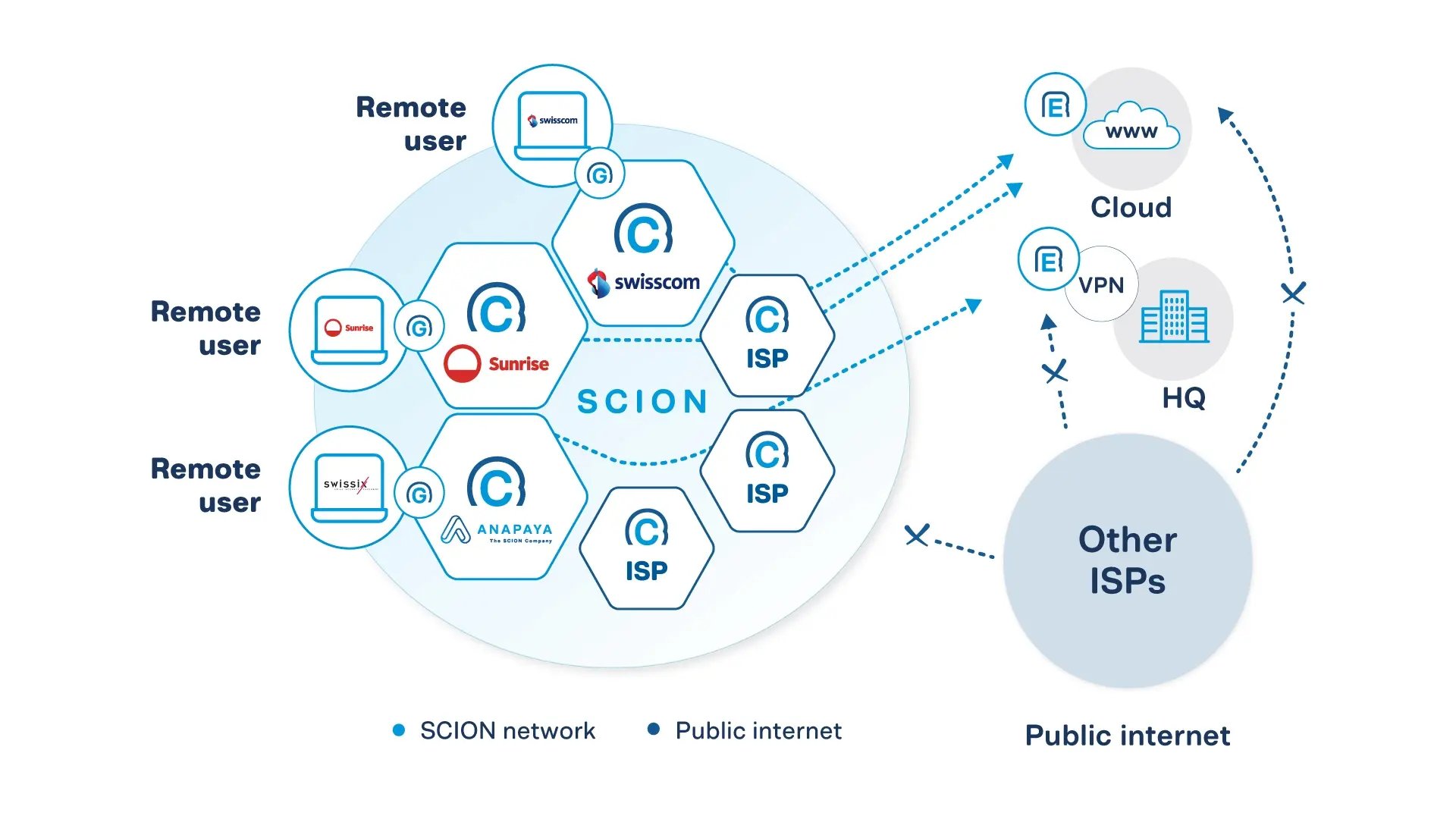
For users, however, very little changes and that is how it should be. There is no need to install SCION software or change how they connect to the VPN. Users simply access the service as usual from a network with access to one of the selected Anapaya GATEs. Their traffic is automatically routed through the GATE and across the SCION network to the protected VPN.
Anapaya GATE in practice: Protecting a bank’s VPN infrastructure
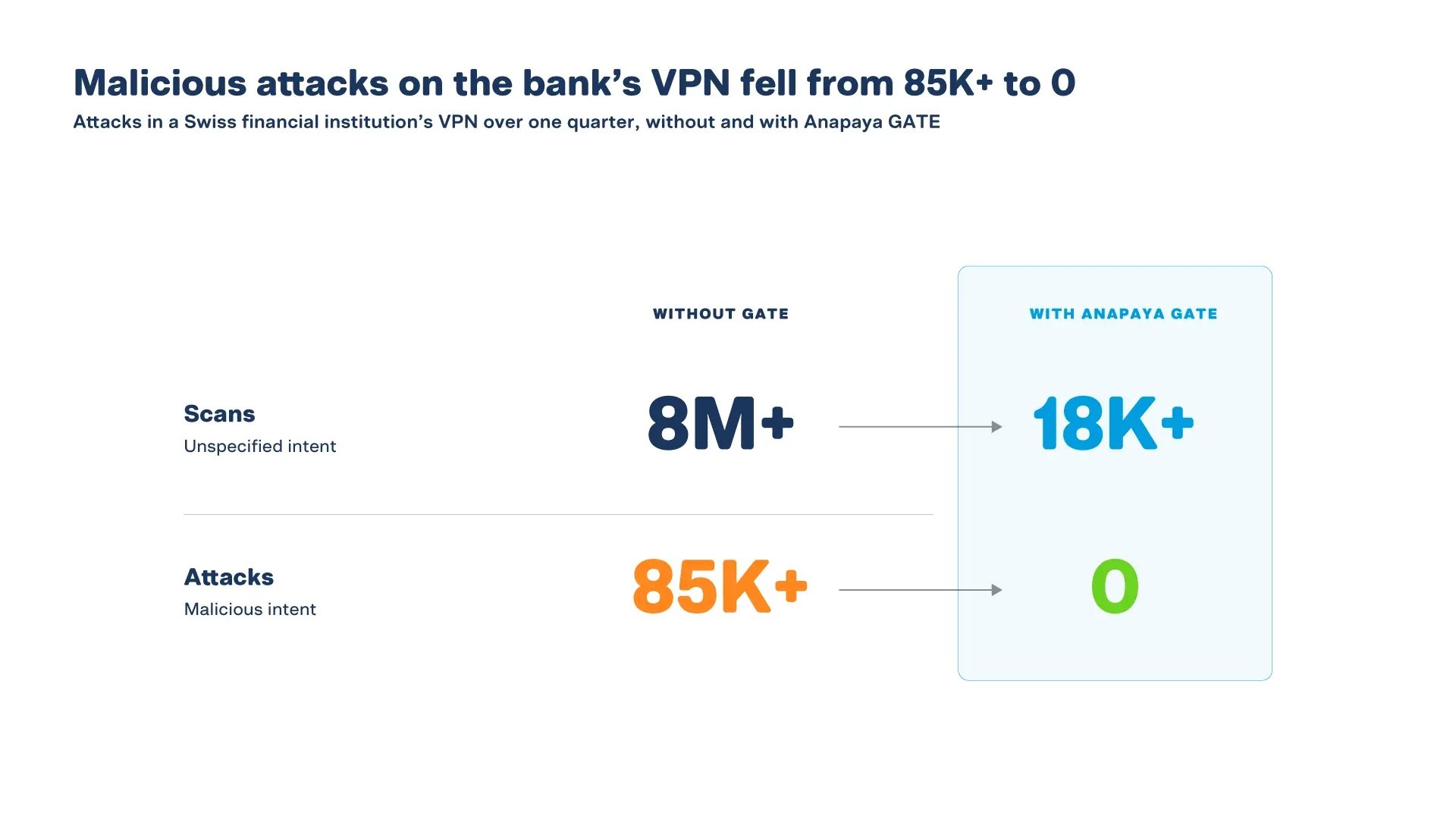
In 2023, we tracked the number of attacks perpetrated against a Swiss financial institution for a quarter. During that time, they suffered 8M+ attacks with unspecified intent (scans) and 85K+ attacks with malicious intent on their VPN infrastructure.
The bank decided to put their VPN on the SCION network accessed by their users via Anapaya GATE. Unsurprisingly, the numbers during the same quarter went significantly down: only 18K+ attacks with unspecified intent (scans) and 0 attacks with malicious intent were reported. Having control over their VPN attack surface allowed them to more easily monitor and detect scans and, ultimately, react quicker to potential breaches. This solution was used by Swiss-based employees and not by the entire workforce (for those the VPN was accessible via the public Internet).
At the beginning of January 2024, the same financial institution was using Ivanti Connect Secure and Ivanti Policy Secure Gateway products when Ivanti disclosed two vulnerabilities that enabled attackers to execute commands on affected systems. By mid-January, at least 1,700 devices had been compromised.
Immediately, the financial institution implemented the response plan for mitigating risks by activating the protective measures recommended by the manufacturer. However, any zero-day exploit can have far-reaching ramifications as we have seen. For hackers, it would be easy to identify the institution as a user of the breached software through port scanning, which would have put them in immediate danger of being targeted. On top of that, given that the patch was fixed only later, the institution would have been left open to system breaches for an undetermined period of time, or, unbeknownst to them, cybercriminals could have already gained access to the network and placed backdoors for lateral movement in the future.
So the bank went above standard to best practice: in addition to implementing the manufacturer’s recommendations, they also activated Anapaya GATE on the SCION network.
Within 10 minutes of the Ivanti flaw discovery, the financial institution was able to:
- Respond immediately to attacks by "shutting off" access to users on the global Internet.
- Reduce attack surface by limiting access to only protected remote connections running on the SCION network via Anapaya GATE.
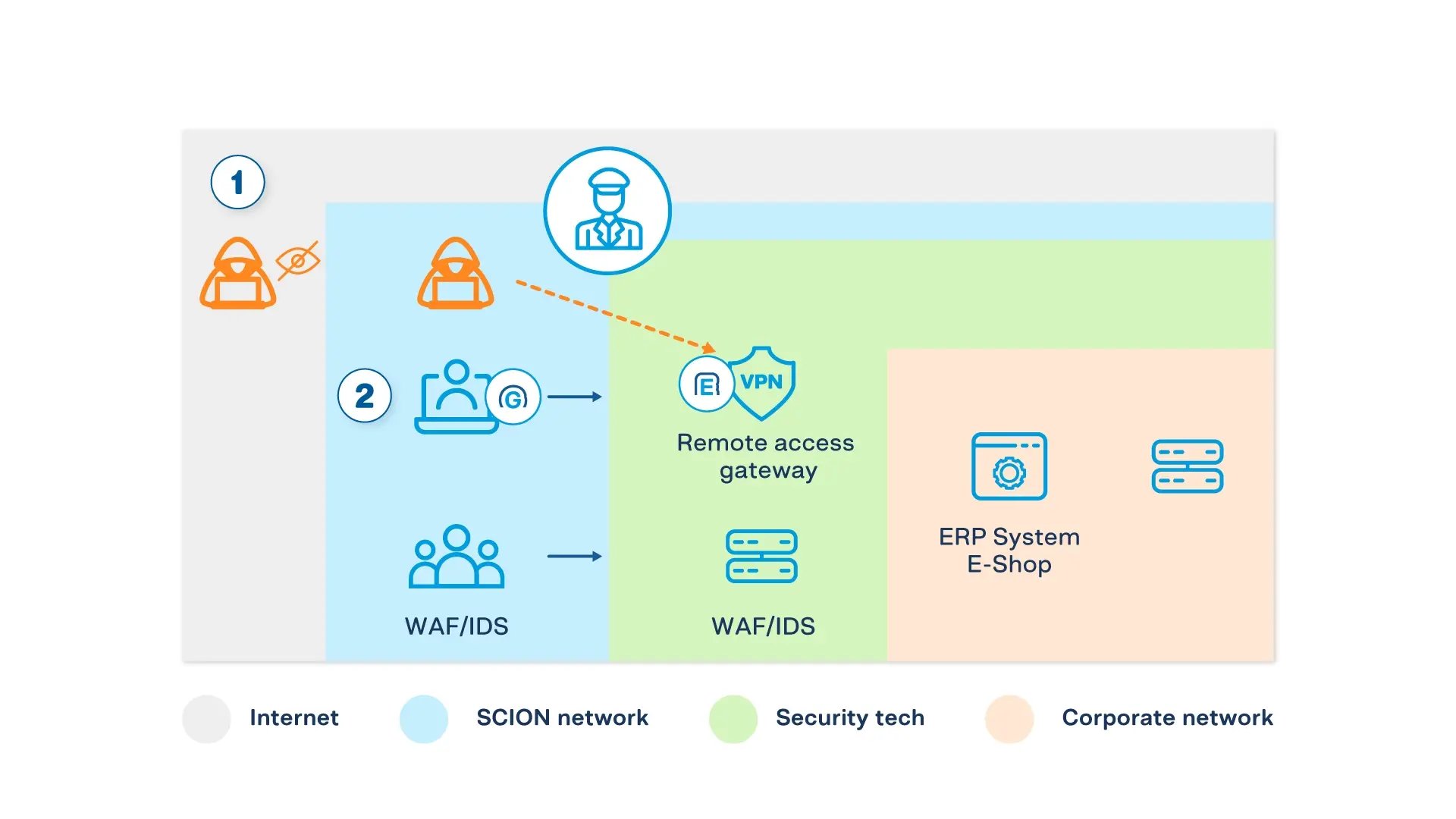
The option to block access to users on the global Internet proved to be invaluable. It provided an additional layer of protection against zero-day exploits, allowing the bank to confidently control and safeguard their VPN infrastructure and thus, their network.
How to protect your VPN with Anapaya PathGuard
For organizations with a known group of remote users, such as employees or trusted third parties, Anapaya PathGuard offers a way to protect existing VPN infrastructure without exposing it to the public Internet.
Unlike traditional VPN deployments, where the VPN gateway has a publicly reachable IP address, Anapaya PathGuard restricts network reachability to explicitly authorized users. This is achieved through three steps:
1. Connect the VPN infrastructure to the SCION network
- The organization deploys an Anapaya EDGE on premises or in the cloud, with an integrated PathGuard Gateway, placing its existing VPN infrastructure on the SCION network.
- The PathGuard Gateway is the SCION termination point. Beyond the PathGuard Gateway, no modifications to the existing applications are necessary.
2. Authenticate authorized users
- Employees and other approved remote users connect through a PathGuard Client and authenticate using the organization's existing identity provider.
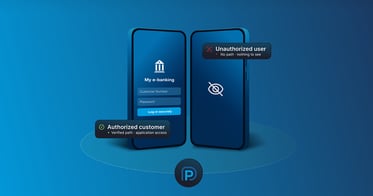
- Once authenticated and authorized, users receive the path information required to reach the protected VPN gateway over the SCION network. Unauthorized users receive no path information and therefore cannot establish a connection to the protected service.
3. Establish a protected connection
- Authorized user traffic enters the SCION network through SCION network Access Point (SNAP) and follows the path made available by the HPS to reach the VPN gateway.
- The existing VPN continues to provide its encryption and authentication capabilities, while Anapaya PathGuard adds an additional layer of protection by controlling who can reach the infrastructure in the first place.
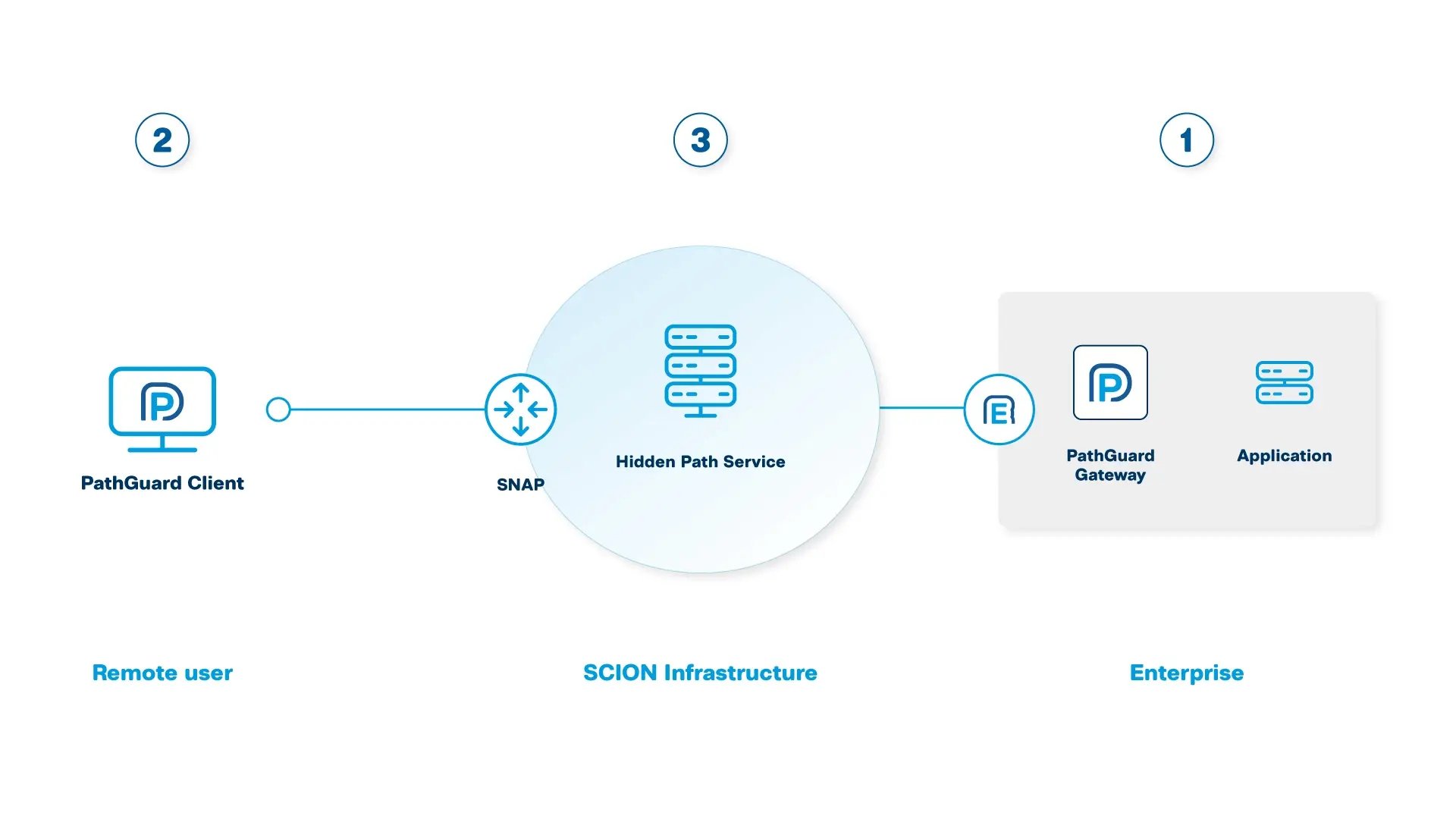
For unauthorized users, the VPN gateway is unreachable, reducing its exposure to Internet-wide scanning, DDoS attacks, and attempts to exploit software vulnerabilities.
In simple terms: No authorization. No path. No access.
Anapaya PathGuard in practice: Protecting e-banking applications
The same principle of reducing Internet exposure can be applied beyond VPN infrastructure to critical applications such as e-banking.
Banks need to make their e-banking services accessible to customers anytime, anywhere. However, exposing these applications to the public Internet also makes them potential targets for DDoS attacks, scanning, and attempts to exploit software vulnerabilities.
With Anapaya PathGuard, banks can reduce their attack surface by making their e-banking applications reachable only to authorized users.
The e-banking backend is deployed behind a PathGuard Web Gateway in a hidden SCION Autonomous System (AS). Mobile banking applications integrate the SCION SDK, while browser-based access is enabled through the PathGuard Web SDK, without requiring custom browser extensions or additional system software.
To make access seamless for customers, the bank purchases a sponsored subscription, allowing customers to access the e-banking application over SCION without needing individual subscriptions.
The result is a protected e-banking application that remains accessible to authorized customers while reducing its exposure to threats originating from the public Internet.
Getting started with a solution to strengthen your remote access infrastructure
Remote access has become essential in modern business, and VPNs remain an effective tool for encrypting connections between remote users and corporate networks. But as VPN infrastructure becomes an increasingly attractive target for cybercriminals, organizations also need to consider how they protect the VPN itself.
Traditional security measures remain important, but many rely on identifying and blocking unwanted traffic once it has already reached the network perimeter. With attackers increasingly using AI to accelerate scanning and vulnerability exploitation, reducing exposure in the first place adds another layer of defense.
Anapaya GATE and Anapaya PathGuard offer two approaches to protecting existing VPN infrastructure using SCION technology.
With Anapaya GATE, organizations can restrict access to their VPN infrastructure to users within selected networks. With Anapaya PathGuard, they can go one step further and make the infrastructure reachable only to explicitly authorized users.
Both approaches help organizations strengthen cyber resilience without replacing their existing VPN solutions.
Keep your VPN. Reduce its attack surface.